Tarot vs. Oracle Cards: What's the Difference?
Introduction
The world of divination and spiritual guidance has captivated human consciousness for centuries. Among the most popular tools for seeking insight, clarity, and direction are tarot cards and oracle cards. While these two systems are often mentioned in the same breath and sometimes used interchangeably by casual practitioners, they are distinctly different tools with unique histories, structures, and purposes. Understanding the differences between tarot and oracle cards is essential for anyone interested in exploring these powerful divination systems, whether you're a seasoned practitioner or a curious beginner.
This comprehensive guide will explore the nuances between tarot and oracle cards, examining their origins, structures, interpretations, and practical applications. By the end of this exploration, you'll have a clear understanding of what makes each system unique and how to choose the right tool for your spiritual journey.
The Historical Origins of Tarot Cards
The Birth of Tarot in Medieval Europe
Tarot cards have a rich and fascinating history that dates back to the 15th century in Italy. Originally, tarot cards were not used for divination at all. Instead, they were created as playing cards for the Italian nobility, particularly in Milan and other northern Italian cities. These early decks were called "tarocchi" and were used for a card game similar to bridge.
The earliest known tarot decks were commissioned by wealthy families as status symbols and works of art. The Visconti-Sforza deck, created in the 15th century, is one of the most famous examples of these early tarot cards. These decks featured elaborate illustrations and were hand-painted by skilled artists, making them extremely valuable and exclusive possessions.
The Evolution into Divination
The transition from game to divination tool happened gradually over several centuries. By the 18th century, tarot cards had become associated with mysticism and fortune-telling, particularly in France. Occultists and mystics began to attribute deeper meanings to the cards, developing complex systems of interpretation that incorporated elements of Kabbalah, astrology, and other esoteric traditions.
The most significant development in tarot's evolution came in the late 19th and early 20th centuries when occultists like Arthur Edward Waite and Pamela Colman Smith created the Rider-Waite deck in 1909. This deck revolutionized tarot by including detailed illustrations on all cards, making it much more accessible and interpretable for divination purposes. The Rider-Waite deck became the foundation for most modern tarot interpretations and remains one of the most popular decks in use today.
Standardization of the Tarot Structure
As tarot became more established as a divination tool, a standardized structure emerged. The traditional tarot deck consists of 78 cards divided into two main sections: the Major Arcana and the Minor Arcana. This structure has remained consistent across most tarot decks for centuries, providing a reliable framework for interpretation and study.
Understanding Oracle Cards
The Modern Origins of Oracle Cards
Unlike tarot, which has centuries of history, oracle cards are a relatively modern invention. While some practitioners trace oracle cards back to ancient divination systems, the oracle cards we know today were developed primarily in the late 20th century. The modern oracle card movement gained significant momentum in the 1990s and 2000s, with the creation of numerous oracle decks designed to provide guidance, inspiration, and spiritual insight.
Oracle cards emerged as a more accessible and flexible alternative to tarot. While tarot has a rigid structure and specific meanings for each card, oracle cards were designed to be more intuitive and less bound by traditional interpretations. This flexibility appealed to many people who found tarot intimidating or overly complex.
The Diversity of Oracle Card Systems
One of the defining characteristics of oracle cards is their incredible diversity. Unlike tarot, which follows a relatively standardized format, oracle decks can vary dramatically in theme, number of cards, artwork, and interpretive framework. Some oracle decks focus on angels, others on animals, nature, goddesses, or abstract concepts. This diversity means that oracle cards can be tailored to individual spiritual beliefs and preferences in ways that tarot cannot.
Popular oracle decks include the Angel Cards, the Goddess Oracle, the Animal Spirit Oracle, and countless others. Each deck comes with its own guidebook that explains the meanings and interpretations specific to that particular deck. This customization is one of the reasons oracle cards have become so popular in recent years.
The Structural Differences
Tarot Card Structure
The tarot deck's structure is one of its most defining characteristics. The 78 cards are divided into two main sections:
The Major Arcana consists of 22 cards numbered from 0 to 21. These cards represent major life themes, spiritual lessons, and significant life events. Cards like The Fool, The Magician, The High Priestess, The Lovers, The Tower, and The World are part of the Major Arcana. These cards are considered the most powerful and significant in a tarot reading, often indicating major turning points or important spiritual messages.
The Minor Arcana consists of 56 cards divided into four suits: Wands, Cups, Swords, and Pentacles. Each suit contains 14 cards, including ten numbered cards (Ace through Ten) and four court cards (Page, Knight, Queen, and King). The Minor Arcana deals with everyday matters, challenges, and situations. Each suit has its own area of focus: Wands typically represent creativity and passion, Cups represent emotions and relationships, Swords represent intellect and conflict, and Pentacles represent material matters and physical reality.
This structured system provides a comprehensive framework for understanding all aspects of human experience, from the spiritual and transformative (Major Arcana) to the practical and everyday (Minor Arcana).
Oracle Card Structure
Oracle cards have no standardized structure. The number of cards in an oracle deck can range from as few as 30 cards to as many as 60 or more. There are no required divisions or categories, though some decks do organize their cards thematically.
Unlike tarot, oracle cards don't have a hierarchical system or a distinction between major and minor themes. Each card in an oracle deck stands alone with its own meaning, which is typically explained in the accompanying guidebook. This lack of structure makes oracle cards more flexible and intuitive to use, but it also means that each deck must be learned individually.
The flexibility of oracle card structure allows creators to design decks around specific themes or purposes. Some oracle decks are designed specifically for healing, others for manifestation, spiritual guidance, or personal development. This thematic focus can make oracle cards particularly useful for people seeking guidance in specific areas of their lives.
Card Meanings and Interpretations
Tarot Interpretations
Tarot card meanings are deeply established and relatively consistent across different decks and interpretive traditions. Each card has a primary meaning, a reversed meaning, and numerous secondary meanings that depend on context, position in a spread, and surrounding cards.
For example, The Tower card in tarot typically represents sudden change, upheaval, revelation, or destruction. However, the specific interpretation depends on whether the card appears upright or reversed, what question is being asked, and what other cards appear in the reading. A skilled tarot reader understands these nuances and can provide nuanced interpretations based on the specific context of the reading.
The consistency of tarot meanings across decks and traditions is both a strength and a limitation. It provides a reliable framework for interpretation and allows readers to study tarot deeply, building expertise over time. However, it can also feel restrictive to some practitioners who prefer more intuitive or personalized interpretations.
Oracle Interpretations
Oracle card interpretations are typically more straightforward and intuitive than tarot. Each card usually has one primary meaning or message, which is explained in the deck's guidebook. There are no reversed meanings or complex secondary interpretations to master.
This simplicity makes oracle cards more accessible to beginners. You don't need to memorize dozens of meanings for each card or understand complex systems of interpretation. Instead, you can focus on the card's primary message and how it relates to your question or situation.
However, this simplicity also means that oracle readings can sometimes feel less nuanced or detailed than tarot readings. Oracle cards are often used more for inspiration and guidance than for detailed analysis of complex situations. Many practitioners find oracle cards particularly useful for daily draws or quick guidance, while reserving tarot for more in-depth readings.
Spreads and Reading Methods
Tarot Spreads
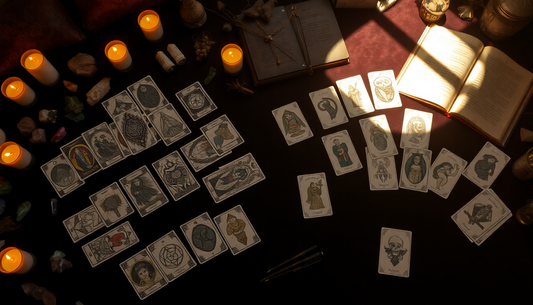
Tarot readings typically use structured spreads, which are specific arrangements of cards that provide a framework for interpretation. Some of the most popular tarot spreads include:
The Three-Card Spread is one of the simplest and most versatile tarot spreads. It can be used to represent past-present-future, mind-body-spirit, or any other three-part framework the reader chooses. This spread is excellent for quick readings and for beginners learning to interpret cards.
The Celtic Cross Spread is one of the most famous and complex tarot spreads. It uses ten cards arranged in a specific pattern and provides detailed insight into a situation, including the querent's hopes, fears, influences, and likely outcome. This spread is favored by experienced readers for in-depth analysis.
The Relationship Spread uses multiple cards to explore the dynamics between two people, examining each person's feelings, needs, and the overall relationship dynamic. This spread is particularly useful for those seeking clarity about romantic or personal relationships.
The Year Ahead Spread uses twelve cards, one for each month, to provide guidance and insight for the coming year. This spread is popular at the beginning of the year or when someone is seeking long-term perspective.
The structured nature of tarot spreads means that the position of each card carries specific meaning. In the Celtic Cross spread, for example, the first card represents the situation, the second represents the challenge, the third represents the conscious goal, and so on. This positional meaning adds depth and nuance to tarot readings.
Oracle Spreads
Oracle cards can be used with spreads, but they are often used more intuitively than tarot. Many oracle practitioners simply draw one or more cards without a specific spread structure, allowing the cards to speak directly to the question or situation at hand.
When oracle spreads are used, they tend to be simpler and more flexible than tarot spreads. A common oracle spread might be a simple three-card draw representing past-present-future, or a five-card spread representing different aspects of a situation. However, many oracle practitioners prefer to draw cards intuitively without adhering to a specific spread structure.
This flexibility is one of the appeals of oracle cards for many practitioners. You can use them in whatever way feels right for your situation, without needing to learn complex spread structures or positional meanings. This makes oracle cards particularly appealing to people who prefer a more intuitive, less structured approach to divination.
Accessibility and Learning Curve
Learning Tarot
Learning tarot requires commitment and study. To become proficient with tarot, you need to memorize the meanings of 78 cards, understand the significance of upright and reversed positions, learn various spread structures, and develop the ability to interpret cards in context.
Many tarot students spend months or even years studying before they feel confident giving readings. There are numerous books, courses, and resources available for learning tarot, from beginner guides to advanced texts exploring the esoteric symbolism and history of the cards.
However, this steep learning curve is not necessarily a disadvantage. Many people find the process of learning tarot to be deeply rewarding and spiritually enriching. The study of tarot can lead to profound personal insights and spiritual growth. Additionally, the complexity of tarot means that experienced readers can provide highly detailed and nuanced readings that address complex situations from multiple angles.
Learning Oracle Cards
Oracle cards are much more accessible to beginners. Since each deck comes with its own guidebook explaining the meanings of the cards, you don't need to memorize complex systems or study for months before using the cards. Many people can begin using oracle cards effectively within days or even hours of purchasing their first deck.
This accessibility is one of the primary reasons oracle cards have become so popular in recent years. They provide a low-barrier entry point into divination and spiritual guidance. Someone can purchase an oracle deck, read the guidebook, and begin drawing cards for guidance immediately.
However, this accessibility can also be a limitation. Because oracle cards are easier to learn, some practitioners may not develop the depth of knowledge and skill that comes with studying tarot. Additionally, the simplicity of oracle card meanings can sometimes feel limiting to those seeking more detailed or nuanced guidance.
Choosing Between Tarot and Oracle Cards
When to Use Tarot
Tarot is particularly well-suited for situations where you need detailed, nuanced guidance or want to explore a complex situation from multiple angles. Tarot's structured system and complex interpretations make it ideal for:
In-depth personal readings where you want to understand all aspects of a situation, including hidden influences, challenges, and potential outcomes. Tarot's 78-card system and complex interpretations provide the depth needed for thorough analysis.
Exploring patterns and cycles in your life. Tarot's Major and Minor Arcana structure allows you to understand both the spiritual lessons and practical implications of situations you're facing.
Long-term planning and strategy where you need to understand how different factors will influence outcomes over time. Tarot spreads can provide detailed roadmaps for navigating complex situations.
Spiritual development and personal growth where you want to use divination as a tool for deeper self-understanding and transformation. Many people find that working with tarot over time leads to significant personal insights and spiritual evolution.
When to Use Oracle Cards
Oracle cards are particularly well-suited for situations where you want quick guidance, inspiration, or affirmation. Oracle cards are ideal for:
Daily guidance and inspiration where you want a simple message to guide your day. A single oracle card draw can provide focus and direction for your daily activities.
Quick answers to specific questions where you don't need extensive analysis but rather a clear, direct message. Oracle cards excel at providing straightforward guidance.
Spiritual affirmation and encouragement when you need reassurance or motivation. Many oracle decks are specifically designed to provide uplifting, positive messages.
Exploring specific themes or areas of life through thematic oracle decks. If you're interested in angel guidance, animal wisdom, or goddess energy, there's likely an oracle deck designed specifically for that purpose.
Accessibility and ease of use when you want divination tools that don't require extensive study or memorization. Oracle cards are perfect for beginners or for those who prefer intuitive over structured approaches.
Combining Tarot and Oracle Cards
Using Both Systems Together
Many experienced practitioners use both tarot and oracle cards, often in combination. A common approach is to use tarot for detailed readings and oracle cards for daily guidance or affirmation. Some readers use oracle cards to clarify or expand upon tarot readings, drawing an oracle card after a tarot reading to provide additional insight or confirmation.
This combined approach allows practitioners to benefit from the strengths of both systems. The detailed structure and complexity of tarot provides comprehensive analysis, while the simplicity and accessibility of oracle cards provides quick guidance and inspiration.
Creating a Balanced Practice
If you're interested in working with both tarot and oracle cards, consider developing a balanced practice that incorporates both tools. You might use tarot for weekly or monthly readings that explore deeper questions and patterns, while using oracle cards for daily draws that provide quick guidance and inspiration.
This balanced approach allows you to develop expertise with tarot while still enjoying the accessibility and flexibility of oracle cards. Over time, you may find that your practice naturally evolves, with tarot and oracle cards playing complementary roles in your spiritual journey.
The Role of Intuition in Both Systems
Intuition in Tarot Reading
While tarot has a structured system of meanings, intuition plays a crucial role in tarot reading. A skilled tarot reader doesn't simply recite memorized meanings but instead uses intuition to interpret cards in the context of the specific reading and the querent's situation.
Intuition helps the reader understand which meanings are most relevant, how cards interact with each other, and what deeper messages the cards are conveying. Many experienced tarot readers report that they often receive intuitive insights that go beyond the traditional meanings of the cards, providing guidance that is uniquely relevant to the person being read for.
Developing intuitive skills in tarot reading takes time and practice. As you work with tarot over months and years, you develop an intuitive understanding of the cards that goes beyond intellectual knowledge. This intuitive mastery is one of the rewards of committing to tarot study.
Intuition in Oracle Reading
Intuition is even more central to oracle card reading. Because oracle cards have simpler, more straightforward meanings, the reader's intuition becomes the primary tool for interpretation. An oracle reader uses intuition to understand how the card's message applies to the specific question or situation, and to receive any additional insights or guidance that the card is conveying.
Many oracle practitioners describe their reading process as highly intuitive and personal. The same oracle card might convey different messages to different people, depending on their intuitive interpretation and the context of their situation. This intuitive flexibility is one of the appeals of oracle cards for many practitioners.
Spiritual and Philosophical Perspectives
The Tarot as a Spiritual Tool
For many practitioners, tarot is more than just a divination tool; it's a spiritual practice and a path of personal development. The Major Arcana, in particular, is often viewed as a spiritual journey, with The Fool's Journey representing the soul's progression through different stages of spiritual development and enlightenment.
Many tarot practitioners view their work with the cards as a form of meditation and spiritual practice. The process of studying tarot, contemplating the symbolism of the cards, and using tarot for self-reflection can